
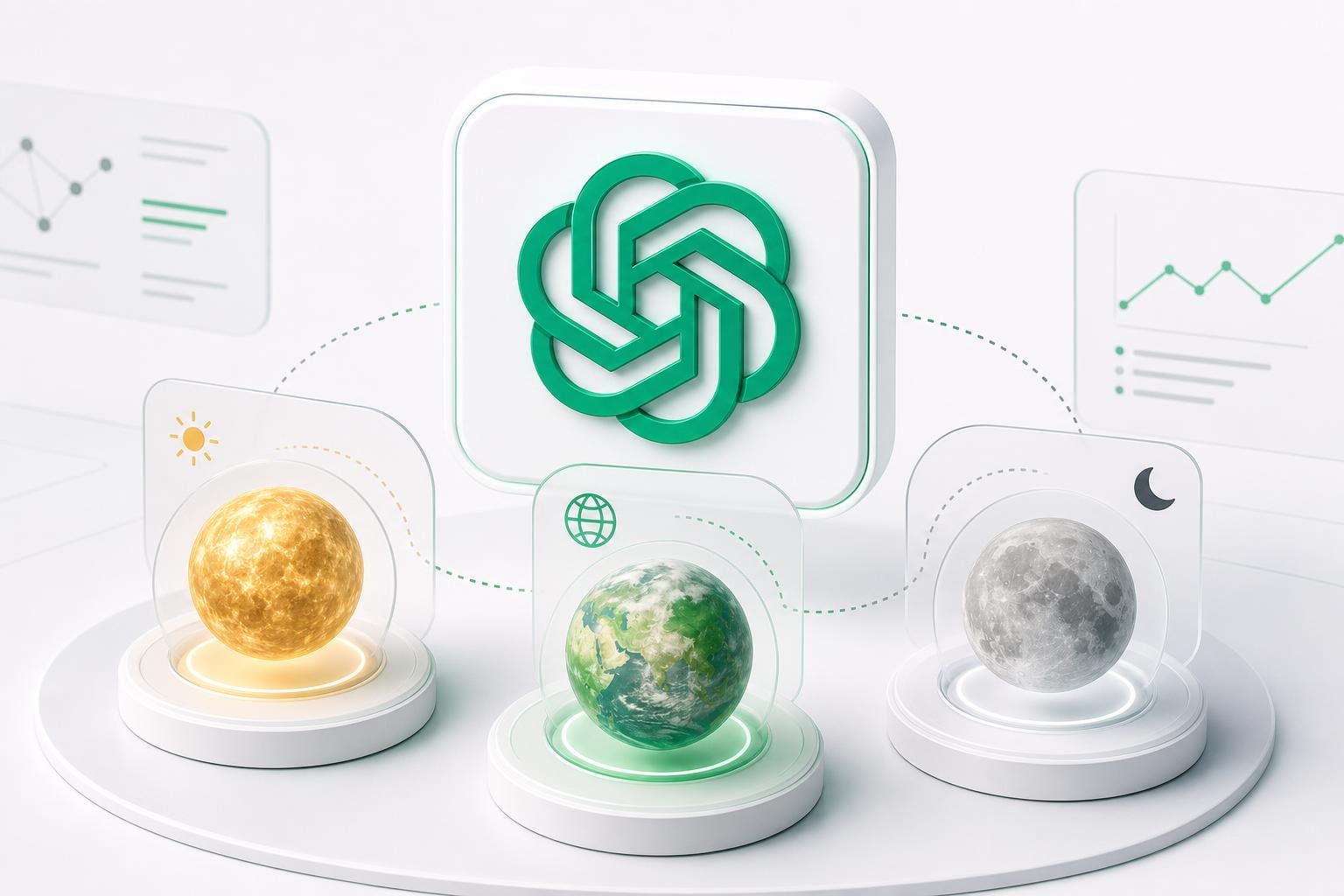
OpenAI is expanding its model family with GPT-5.6, adding three variants for different needs. The spotlight is on Sol as the most powerful model, complemented by Terra and Luna for cheaper and faster AI use cases. For you as a user, that mainly means: depending on the task, you can pick the right model—maximum performance, a balanced mix of cost and speed, or particularly budget-friendly AI requests.
What GPT-5.6 changes for users
GPT-5.6 consists of Sol, Terra, and Luna. The model family is designed to handle complex tasks with fewer tokens, shorter response times, and lower overall costs. The goal is to get more useful work done per request, rather than simply producing longer answers.
Sol is meant for hard problems, Terra for a compromise between performance and cost, and Luna for quick, simple requests.
For you as a user, the model name matters less than using the right one for the job. Complex writing, software projects, data analysis, and multi-step tasks benefit most from Sol. Short emails, simple summaries, or quick replies usually don’t need a top-tier model.
- Sol: a good choice for demanding work, programming, and multi-step tasks.
- Terra: a solid pick when you want a balanced mix of performance, speed, and cost.
- Luna: ideal for simple everyday questions, short texts, and quick standard tasks.
OpenAI is making GPT-5.6 available in ChatGPT, Codex, and the API. For developers, GPT-5.6 Terra is also documented as its own API model.
How the competition fits in
GPT-5.6 lands in a market where several providers are pushing more capable and cheaper AI models at the same time. Unlike in the past, it’s no longer only about raw maximum performance. Providers are increasingly trying to deliver better results with less time and lower costs.
Anthropic positions Claude Fable as a particularly powerful model for tough reasoning and agent-style tasks.
xAI is introducing Grok 4.5 as a model for coding, agents, and knowledge work. Where it fits best depends heavily on whether you need top performance, low API costs, or fast responses.
The shared trend is clear: the big AI providers are evolving their models into work assistants. Instead of just answering questions, they’re expected to research, code, process files, and complete longer workflows as independently as possible.
Benchmarks can give you a first point of reference, but they don’t replace your own testing. Tasks like coding, research, long workflows, or creative writing can vary a lot from model to model.
Which model choice makes sense
For most people, one simple rule helps: the strongest model is worth it when the task is expensive, long, or prone to errors. For short routine tasks, a cheaper model is usually enough.
- Difficult tasks: test Sol or Fable, especially for longer projects and complex programming.
- Cost-conscious usage: consider Grok 4.5, Terra, or Luna if you’re making lots of requests.
- Simple everyday texts: smaller models are often sufficient and save money.
The most important decision is still your specific use case. A model can look great in benchmarks and still be a worse fit for a particular task. If you work with AI regularly, you should run quick, practical tests with realistic tasks.