

GPT-6 Luna
Schnell und günstig für Alltagsfragen
Best for: everyday questions, short texts and translations · fast
- No login required
- Understands images
- Web search
- Thinking mode
approx. 92 tokens per response
The current GPT models from OpenAI right in your browser: type your question and start with GPT-6 Luna, no login, no subscription, English interface.
Genuine OpenAI models through the official API, no account with the provider. As a guest you get 15,000 tokens with GPT-6 Luna. A free account adds 15,000 tokens a day, all models, uploads and saved chats.
ChatGPT is the AI chatbot from US company OpenAI. It went live as a free preview on November 30, 2022, and today runs on the sixth generation of GPT models. What set it apart from day one was the conversation: you ask follow-up questions, ask for corrections and get answers in natural language instead of search results. On ChatX you use the same GPT models through OpenAI's official API, with no OpenAI account and an English interface.
Choose the model that fits your task. Fast models are enough for everyday questions, while the larger models pay off for long texts, analyses, and code.
Schnell und günstig für Alltagsfragen
Best for: everyday questions, short texts and translations · fast
approx. 92 tokens per response
Starkes Allround-Modell für Texte, Analyse und Code
Best for: long texts, analysis and code · balanced
approx. 1,823 tokens per response
OpenAIs Spitzenmodell für anspruchsvolle Aufgaben
Best for: tricky tasks with thinking mode · thorough
approx. 9,112 tokens per response
With GPT Image 2.6, OpenAI has made its image model faster and taught it a new trick: it can now generate animated GIFs on request. Both ve…
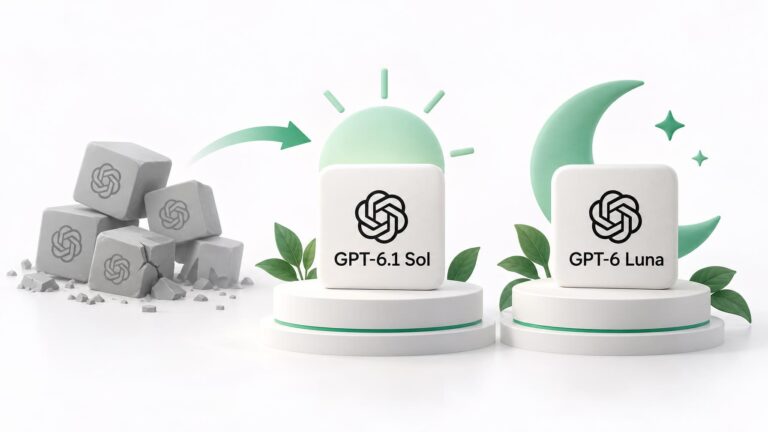
OpenAI has added two new models. GPT-6 Luna is the low-cost model for everyday work, GPT-6.1 Sol comes close to GPT-6 Astra and costs a fif…
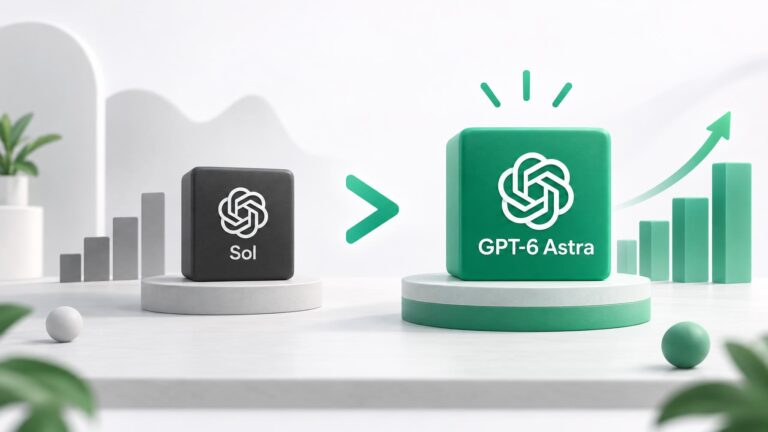
GPT-6 Astra has been the successor to GPT-5.6 Sol since the beginning of September, and it costs around two and a half times as much. So th…
Emails, job applications, posts or product copy in the right tone, shorter or more formal if you like.
Paste a long text and get the key points in a few sentences or as a list.
Translate between English, Spanish, German and many other languages and smooth out the style.
Explain code, find bugs, write functions or build a script step by step.
Turn on web search for models with the globe icon and get answers with current sources.
Get difficult topics explained in plain words, with examples and quiz questions.
Behind ChatGPT are the GPT models from OpenAI. On ChatX you use the same models through the official API, with an English interface and billing per reply instead of a monthly subscription. The page starts with the preset, low-cost model GPT-6 Luna, which you use without signing up and which is enough for everyday questions, short texts and translations; it already comes with a thinking mode. With a free account you switch to GPT-6.1 Sol or GPT-6 Astra for long texts, analyses and code, and for models with web search you turn the search on so the reply includes current sources. With an account you can also upload photos, PDF and Word files and ask questions about them.
Type your question or task into the input field. You don't need to log in for this.
Start with the default model or switch to a more powerful one anytime.
With a free account, you save your chats, upload files, and get free tokens every day.
Behind ChatGPT is a language model that learned from huge amounts of text which word is most likely to come next. Your message is broken into small pieces called tokens, and the answer is then built token by token. That's also why ChatX bills each answer by tokens rather than by message.
To make the model follow instructions instead of just continuing text, OpenAI trained it further using ratings from people. That's why ChatGPT understands follow-up questions, accepts corrections and adapts its tone. The thinking mode you turn on for GPT-6 Luna and GPT-6 Astra makes the model compute longer before answering; that helps with math, logic and code and uses more tokens.
The model only knows what was known by the end of its training. For current questions, turn on web search for models with the globe icon, and it will search the web and cite sources. And because it calculates probabilities, it can sound convincing and still be wrong: numbers, names and quotes are worth a quick double-check.
Your message goes from ChatX straight to OpenAI's official API, and the answer comes back the same way. You don't need an OpenAI account for this, and OpenAI doesn't see your name or email address from ChatX. According to OpenAI's data policy for its API (as of November 2026), these requests are not used to train the models; OpenAI may keep them for up to 30 days to check for abuse, and processing takes place mainly in the US.
ChatX only saves your chats if you have an account, and then only for you. You can delete any chat at any time. Without signing up, nothing is stored permanently in an account.
OpenAI is a US company, so processing takes place outside the EU. Don't enter passwords, health data or secrets that shouldn't end up in someone else's hands. You'll find the details in the privacy policy.
GPT is the all-rounder: it follows instructions very reliably, formats cleanly and is a safe choice for everyday writing, summaries and code, while Claude often sounds more natural in long, nuanced texts. Gemini shines with very large documents and Google-style research, Grok answers more directly in a relaxed tone, and DeepSeek is much cheaper but restricted on political topics and its phrasing is occasionally less natural. On ChatX you don't have to commit: switch models in the same chat and compare the answers side by side.
| Model | Strength | No sign-up | Features |
|---|---|---|---|
| ChatGPT | All-rounder for writing, analysis and code | GPT-6 Luna | Web search · Understands images · Thinking mode |
| Claude | Long texts, careful language, code | Claude Haiku 5.5 | Web search · Understands images · Thinking mode |
| Gemini | Fast, large context, understands images | Gemini 3.5 Flash Lite | Web search · Understands images · Thinking mode |
| Grok | Direct tone, quick answers | Grok 4.3 | Understands images · Thinking mode |
| DeepSeek | Math, logic and code at a low price | DeepSeek V4.1 Flash | Web search · Understands images · Thinking mode |
All models run in the same chat. Switch any time without losing your history.
ChatGPT comes from OpenAI, an AI company founded in the US in 2015. It is built on the GPT models OpenAI has been developing since 2018; the chatbot itself launched on November 30, 2022.
You use the real GPT models from OpenAI through their official API, while the interface comes from ChatX. Instead of a monthly subscription you only pay for actual usage per reply, and you have models from other providers in the same place.
For everyday questions GPT-6 Luna is enough. It runs without signing up and already has a thinking mode. For long texts, analysis and code, switch to GPT-6.1 Sol with a free account, and for the trickiest tasks to GPT-6 Astra with thinking mode.
Yes. For models with the globe icon in the input field, you turn on web search in the chat. The answer then includes current sources.
Not in the chat model itself. You create images on ChatX with the AI image generator, where GPT Image from OpenAI is one of the options.
Yes. With a free account you upload photos, screenshots, PDF and Word files and ask questions about them. Without signing up, uploads are not enabled.
The GPT models write clean standard English in different tones and handle many other languages as well. With dialect or highly technical writing, it's worth giving the answer a quick read.
To prevent abuse, you can send at most 30 messages per minute. Beyond that, token usage counts: a starting allowance without signing up, a daily allowance with an account, and after that you buy tokens as needed.
From a research lab founded in the US in 2015, through the chatbot launch in November 2022, to the GPT-6 family that has been running in ChatGPT and on ChatX since fall 2026.
Newest events first
Produkt
OpenAI rolls out GPT-6 widely in ChatGPT and reports more than 1.2 billion weekly users. New is “Intelligent UI”: the chat can create interactive elements such as tables or small tools directly instead of just returning text.
GPT-6 in ChatGPT1.2 bn users/weekIntelligent UI
Modell
Three weeks after Astra, OpenAI adds two variants with different performance and cost profiles. Sol targets the higher paid tiers, while Luna later also powers the low-cost and free plans. On ChatX you can choose these models as GPT-6 Luna and GPT-6.1 Sol.
SolLunaVariants by price
Modell
Astra kicks off the sixth generation, built for computer use, browsing, software development, security research and science. Access is limited at first, followed by paid tiers, the API, Azure and AWS. On ChatX the model is available as GPT-6 Astra with thinking mode.
New generationComputer useAlso on AWS
Regulierung
Since August 2, 2026, most of the European AI regulation applies, and the European Commission can enforce the rules for general-purpose AI models. For providers like OpenAI, the obligations for such models have applied since August 2025, and OpenAI has also signed the voluntary code of practice. For users in the EU, this means more transparency about training and capabilities.
Regulation 2024/1689GPAI obligationsCode of Practice
Modell
GPT-5.6 focuses on efficiency and on tasks the model works through on its own, for example in software, security and research. It is the last big step in the GPT-5 line before GPT-6 follows in September.
EfficiencyAgentic tasksScience
Modell
GPT-5.4 brings native computer use: the model can control programs and browsers instead of only producing text. In the API, the context grows to up to one million tokens, enough for whole books or code repositories at once. In the same month, OpenAI removes the older 5.1 models from ChatGPT.
Computer use1M token contextThinking and Pro
Firma
OpenAI reorganizes: the nonprofit parent is now called the OpenAI Foundation, and the operating business runs as OpenAI Group PBC. The foundation keeps control, but the company can raise far more capital. It is the biggest change since the capped-profit model of 2019.
OpenAI FoundationOpenAI Group PBC
Modell
GPT-5 combines a fast model, a reasoning model and a router that decides for each question how much computing time is worth spending. All ChatGPT users get access, and paid tiers get higher limits. For users, the old split between chat and reasoning models disappears.
RouterBuilt-in thinkingAll plans
Produkt
After Operator (January) and Deep Research (February), OpenAI combines browser, research and tools in one agent that works through multi-step tasks by itself. At the same time, OpenAI reports more than 700 million weekly users.
OperatorDeep Research700M users/week
Produkt
Image generation becomes part of the multimodal GPT-4o instead of a separate tool. Text, image understanding and image creation merge, and users simply describe changes in the conversation. In the same month, new audio models for speech-to-text and text-to-speech arrive.
Native image generationNew audio models
Produkt
ChatGPT gets built-in web search with sources, first for paid tiers and later for everyone. With that, the chatbot competes directly with traditional search engines. Earlier that month, the Realtime API for live voice conversations also launches.
Web searchSourcesRealtime API
Modell
With o1-preview and o1-mini, OpenAI introduces models that compute longer before answering and do much better at math, science and programming as a result. The thinking mode you turn on today for GPT-6 Luna and GPT-6 Astra goes back to this line.
ReasoningMath and code
Modell
The smaller sibling understands text and images, has a 128,000-token context and costs only a fraction of the large models. In ChatGPT it replaces GPT-3.5 and shows that low-cost models are perfectly fine for everyday tasks.
128K contextReplaces GPT-3.5Text and vision
Modell
The “o” stands for omni: GPT-4o handles text, images, audio and video in a single model and answers by voice in about 320 milliseconds on average. The 2023 chain of speech recognition, text model and speech output is no longer needed, and conversations feel more natural.
Omni model320 ms voice replyAudio and video
Produkt
OpenAI gradually opens ChatGPT to users without an account. The barrier to trying it drops, but user numbers get harder to compare, because logged-out use can be counted more than once.
No login needed
Firma
The board removes Sam Altman on November 17; after protests from employees, he returns as CEO a few days later with a reshuffled board. The crisis shows the tension between the nonprofit mission and commercialization. Shortly before, OpenAI had presented GPT-4 Turbo and custom GPTs at DevDay.
Governance crisisNew boardDevDay and GPTs
Regulierung
On March 31, the Italian data protection authority bans the processing over a missing legal basis, lack of transparency and no age checks. After changes to information, the right to object and age verification, ChatGPT is available again from April 28. A fine the authority imposed in 2024 was overturned by the Rome tribunal in March 2026.
GaranteBlocked until Apr 28, 2023Fine overturned 2026
Modell
GPT-4 accepts images as well as text and answers much more reliably than GPT-3.5. For the first time, OpenAI discloses neither the parameter count nor the architecture, a pattern that has held for all large models since. Two weeks earlier, the ChatGPT API with GPT-3.5 Turbo had launched for developers.
Image inputArchitecture kept secretChatGPT API
Produkt
OpenAI introduces a monthly subscription with priority access, faster answers and early access to new features. It marks the start of end users paying directly; Enterprise, Team and Pro follow later. On ChatX, billing per reply replaces this subscription model.
Monthly subscriptionPriority at peak times
Produkt
On November 30, 2022, OpenAI releases ChatGPT as a free research preview based on GPT-3.5. The chatbot answers follow-up questions, corrects itself and declines inappropriate requests. More than a million people sign up within five days, and a year later it has over 100 million weekly users.
Research preview1M users in 5 daysGPT-3.5
Forschung
OpenAI further trains GPT-3 with examples and ratings from people so the model follows instructions instead of just continuing text. A small model with 1.3 billion parameters is preferred over the 175-billion-parameter model. This method, called RLHF, is the direct foundation of ChatGPT.
RLHFFollowing instructions
Modell
GPT-3 arrives with 175 billion parameters and solves tasks just from examples in the prompt, without separate training for each task. In June, OpenAI opens its first general API and turns from a research lab into a platform for developers.
175 bn parametersFew-shotAPI launch 06/2020
Forschung
With 1.5 billion parameters, GPT-2 is the first to write coherent paragraphs. Citing possible misuse, OpenAI initially withholds the largest version and only releases it gradually by November 2019. The same year, Microsoft invests one billion dollars and becomes the exclusive cloud partner.
1.5 bn parametersStaged releaseMicrosoft invests
Forschung
OpenAI shows that a transformer model can first be pretrained on large amounts of text and then fine-tuned for individual tasks. The model has about 117 million parameters and 12 layers. Every later GPT generation builds on this approach.
About 117M parametersPretraining plus fine-tuning
Firma
On December 11, 2015, OpenAI starts as a nonprofit research lab aiming to develop advanced AI for the benefit of everyone; the founders pledge one billion dollars. As early as 2016, Microsoft Azure becomes its main computing platform.
Nonprofit$1 bn pledgedAzure since 2016
Compiled from public announcements by OpenAI and press reports; updated when new models arrive.
Last reviewed: 10. November 2026 · Source: OpenAI